
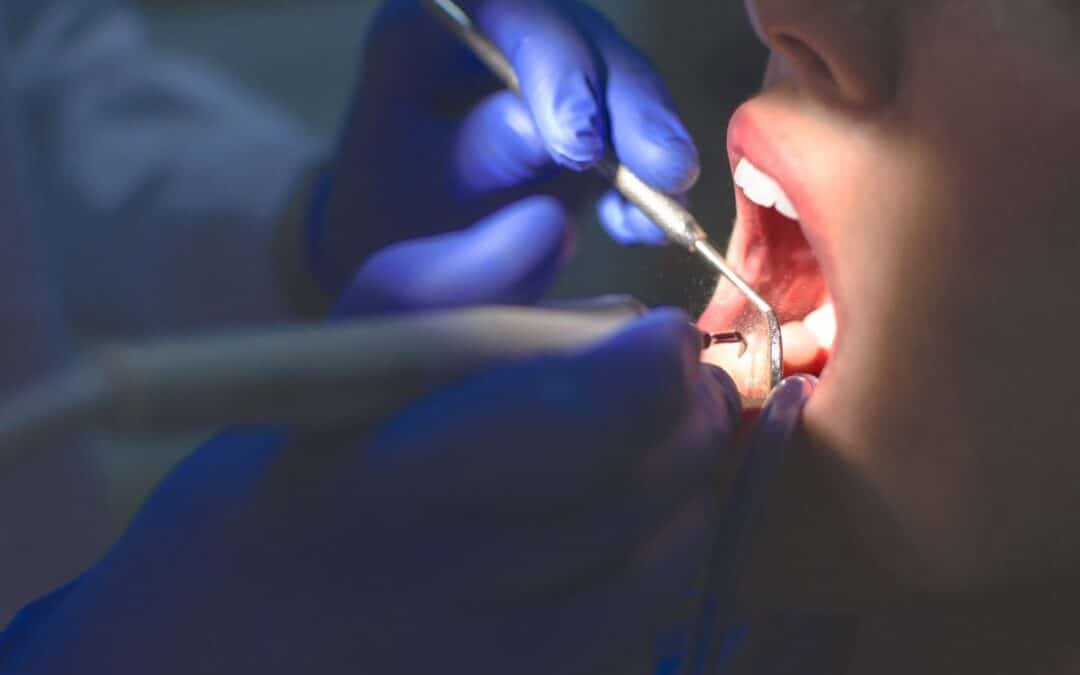
If your hygienist mentioned the words “deep cleaning” at your last visit, you probably left with a few questions. Here is the short answer: a routine dental cleaning removes plaque and tartar from the tooth surfaces and just along the gumline to keep healthy gums healthy, while a deep cleaning, known clinically as scaling and root planing, reaches below the gumline to clear hardened tartar and bacteria from the tooth roots once gum disease has started. At Smile Solutions of Maine, our teams in Waterville, ME and Winthrop, ME recommend one or the other based on what we measure in your mouth, not on a fixed schedule.
Put simply, a routine cleaning protects gums that are already in good shape, and a deep cleaning treats gums that are not. Knowing which applies to you makes your treatment plan far easier to understand and helps you protect the bone that holds your teeth in place.
This Article Will Address
- What takes place during a standard cleaning appointment
- How scaling and root planing works and how it compares
- The warning signs that point to a deeper cleaning
- What treatment feels like and how we keep you comfortable
- How a deep cleaning treats gum disease and what comes next
What Happens During a Routine Dental Cleaning?
A routine dental cleaning, also called a prophylaxis, removes plaque, tartar, and surface stains from teeth that are surrounded by healthy gum tissue. For most adults, this visit takes place about every six months and pairs with a full dental exam.
During the appointment, your hygienist uses hand scalers and an ultrasonic instrument to clear buildup from the visible tooth surfaces and the shallow space where healthy gums meet the teeth. Your teeth are then polished and flossed. No numbing is needed because the work stays at or just below the gumline.
This visit is also when we check your gum health. As part of our routine dental exams and cleanings, the hygienist gently measures the space between each tooth and the gum, and digital radiography helps us see bone levels that are invisible during a visual exam. Those numbers tell us whether a regular teeth cleaning is still enough or whether your gums need more focused care. It is the foundation of the preventive dental care we provide to patients of every age.
What Is a Deep Dental Cleaning?
A deep dental cleaning is a nonsurgical periodontal treatment that removes tartar and bacteria from below the gumline and smooths the root surfaces so the gums can heal and reattach to the teeth. It is made up of two steps performed during the same appointment.
Scaling removes plaque and hardened tartar from the tooth surface and from the periodontal pockets that form when gums pull away from the teeth. Root planing then smooths the rough areas of the root, which makes it harder for bacteria to settle back in. Because this work goes deeper, we numb each section first and usually treat the mouth one quadrant or one side at a time over one or two visits.
Routine Cleaning Compared with Scaling and Root Planing
When patients weigh dental cleaning vs deep cleaning, the differences come down to a few practical points:
- Purpose: A routine cleaning prevents gum disease, while a deep cleaning treats gum disease that is already active.
- Depth: A routine cleaning focuses above the gumline, while a deep cleaning reaches down into the pockets along the roots.
- Comfort: A routine cleaning rarely requires anesthetic, while a deep cleaning is usually performed with the gums numbed.
- Time: A routine cleaning fits into one standard visit, while a deep cleaning often takes one or two longer appointments.
- Follow-up: After a routine cleaning, you return in about six months, while a deep cleaning is followed by maintenance visits every three to four months.
How Do I Know if I Need a Deep Cleaning?
You likely need a deep cleaning if your exam shows gum pockets of roughly four millimeters or deeper, bleeding when those pockets are measured, tartar below the gumline, or bone loss on your X-rays. Healthy gums usually measure between one and three millimeters, so deeper readings are a sign that bacteria have moved below the reach of your toothbrush and floss.
Early gum disease is often painless, which is why many people are surprised by the recommendation. Still, there are warning signs worth paying attention to between visits:
- Gums that bleed when you brush or floss
- Red, puffy, or tender gum tissue
- Bad breath or a bad taste that does not go away
- Gums that seem to be pulling back, making teeth look longer
- Teeth that feel loose or a bite that feels different
Any of these deserves a closer look, but only a clinical exam can confirm whether a deeper cleaning is necessary. When more detail helps, our Kodak 9000 3D imaging shows the bone around your teeth so our recommendation rests on evidence.
Is Scaling and Root Planing Painful?
For most patients, scaling and root planing is not painful because we numb each section before we begin, so you feel pressure and light vibration rather than discomfort. That reflects our commitment to dentistry that is safe, painless, and state-of-the-art.
Many patients tell us the injection worries them more than the cleaning itself. That is one reason we use The Wand computer-assisted anesthesia system, which delivers anesthetic at a slow, controlled rate for a gentler experience. Treating one section at a time also keeps each appointment manageable.
Once the numbness wears off, some tenderness and temperature sensitivity for a few days is normal. Over-the-counter pain relievers and warm saltwater rinses usually keep people comfortable, and most patients return to work or school the same day.
Can a Periodontal Cleaning Help Gum Disease?
Yes. Scaling and root planing is the standard first treatment for mild to moderate periodontitis, and it can stop the infection from progressing, reduce pocket depth, and help inflamed gums tighten back around the teeth.
Gingivitis, the earliest form of gum disease, is often reversed with a thorough professional cleaning and better home care. Periodontitis is more serious because the infection has begun to damage the bone and fibers that support your teeth. A deep cleaning cannot regrow lost bone, but it removes the bacteria driving the damage and gives your gums the best chance to heal. When appropriate, our Picasso Dental Laser can support gum therapy by targeting inflamed tissue with precision.
Treating gum disease early matters beyond your smile. Research has linked periodontal disease with other health conditions, including diabetes and heart disease, which is why we treat gum health as part of your overall wellness. Our dentists, Dr. Peter Laliberte, Dr. Jay Wietecha, Dr. Peter G. Vayanos, and Dr. Joseph Dumont, bring advanced training to every treatment plan. If your case is advanced enough to benefit from a specialist, we will explain why and walk you through each next step.
What Happens After Treatment?
After a deep cleaning, your gums need a few weeks to heal, and you will move to periodontal maintenance visits, usually every three to four months, in place of the standard six-month cleaning. Here is what the weeks after treatment typically look like:
- Mild soreness and sensitivity that fade over several days
- Softer foods for a day or two while the tissue settles
- Gentle but thorough brushing and daily flossing to keep pockets clean
- A follow-up visit several weeks later to measure how your gums have responded
The shorter maintenance schedule exists for a reason. Bacteria can begin to repopulate deeper pockets within about three months, so more frequent visits keep the infection from gaining ground again. If gum disease has already affected a tooth, our full range of general, restorative, and cosmetic dental services lets us help you rebuild strength and function under one roof.
Schedule Your Gum Health Evaluation in Waterville or Winthrop
Whether you are due for a routine cleaning or have noticed bleeding gums, the team at Smile Solutions of Maine is ready to help and welcomes your questions. Call our office in Waterville, ME or Winthrop, ME, or request your appointment online, and we will measure your gum health, explain exactly what we find, and recommend the cleaning that fits your needs.