
Are Dental X-Rays Safe? What Patients Should Know
Yes, dental X-rays are safe, and for most patients they are also one of the most useful tools a dentist has for finding problems while they are still small and easy to treat. At Smile Solutions of Maine, we know some patients feel a little uneasy at the mention of radiation, even in very small amounts, so we want to walk you through exactly what dental X-rays do, how often you actually need them, and what they let your dentist see that a regular exam cannot.
Modern dental X-rays use extremely low doses of radiation and give your dentist a view beneath the surface of your teeth and gums that a visual exam alone simply cannot provide. That view often makes the difference between catching a small cavity early and discovering a bigger problem only after it starts to hurt. Our team offers a full range of family dental services built around exactly this kind of proactive, comfort-focused care.
Our practice has always been built around a simple idea: dentistry should be safe, comfortable, and backed by the best technology available. That philosophy shapes how we approach imaging just as much as it shapes every other part of a visit, from your first cleaning to a more involved restorative procedure.
This Article Will Address
- Whether dental X-rays are actually safe for adults and kids
- How often X-rays are really needed
- What an X-ray can reveal that a regular exam cannot
- Whether children need X-rays as part of their dental care
Are Dental X-Rays Safe?
Yes. For the vast majority of patients, including children, the radiation dose from a typical set of X-rays is very small and carries very little risk. Digital X-rays, which our team uses, reduce that exposure even further compared to older film-based methods, while still giving your dentist a clear, detailed image.
A few of the precautions built into every X-ray visit include:
- Digital sensors instead of traditional film, which cut radiation exposure substantially
- A lead apron placed over the chest and lap during imaging
- A thyroid collar available on request for extra protection
- Imaging limited to only the areas your dentist actually needs to evaluate
Our doctors, including Dr. Joseph Dumont, who has built much of his practice around modern imaging tools like digital radiography and cone beam CT, only recommend X-rays when they will genuinely change how we care for your smile. If you are pregnant, or think you might be, please tell our team before any imaging is scheduled so we can adjust our recommendations accordingly.
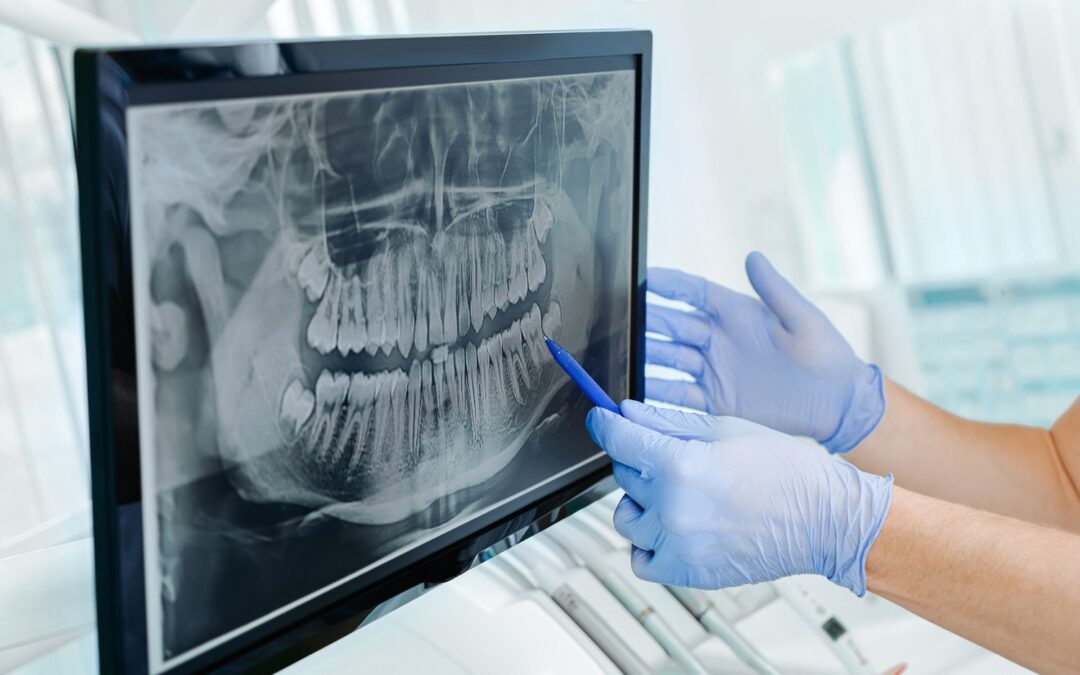
Not every image looks or works the same way. Bitewing X-rays focus on the crowns of your back teeth to check for decay between them, while a panoramic image captures your entire jaw in a single sweep, which is especially useful for tracking wisdom teeth or planning more involved treatment. Our office also uses advanced 3D imaging when a case calls for a closer look at bone structure or root position, giving our doctors more detail with less guesswork.
How Often Should Dental X-Rays Be Taken?
Most patients need a set of bitewing X-rays about once a year, with a more complete full mouth series taken every few years, though your exact schedule depends on your personal oral health history. New patients typically receive a baseline set of images so our team has a clear picture to compare against at future visits.
A few factors that can mean more frequent imaging include:
- A history of gum disease or bone loss
- Frequent cavities or ongoing tooth decay
- Existing crowns, bridges, implants, or dentures that need monitoring
- Symptoms like unexplained pain, swelling, or sensitivity
- No prior X-rays on file, or images that are several years old
Patients with a strong oral health history and a clean record of exams may go longer between imaging. This is one of the many reasons routine dental exams and cleanings matter so much, since your hygienist and dentist can track changes over time and decide together whether new images are actually needed.
Dental organizations generally recommend against a fixed schedule that applies to everyone. Instead, your dentist weighs your age, cavity risk, gum health, and any symptoms you mention before deciding what imaging makes sense at a given visit. That individualized approach is part of why it is worth telling your dentist about any changes since your last appointment, even small ones like new sensitivity or a spot that feels different when you floss.
What Can a Dental X-Ray Show?
A dental X-ray can reveal problems that are completely invisible during a regular visual exam, since it lets your dentist see below the gumline and inside the tooth itself.
A single set of images can show:
- Cavities forming between teeth, long before they are visible to the eye
- Bone loss caused by gum disease
- Infections or abscesses at the root of a tooth
- Impacted or unerupted teeth, including wisdom teeth
- Cysts, tumors, or other abnormal growths in the jaw
- The condition of existing fillings, crowns, or root canals
This kind of detail is part of why preventive dental care works so well. Catching a small cavity or an early sign of bone loss on an X-ray, rather than after it causes pain, usually means simpler, less expensive treatment and a better long-term outcome for your tooth.
When an X-ray does catch decay in its earliest stages, treatment does not always mean a drill. Depending on how early a spot is found, our doctors may recommend a more conservative option first, then monitor the area at your next visit to see how it responds before deciding whether further treatment is needed.
Do Children Need Dental X-Rays?
Yes, children typically need dental X-rays, usually starting somewhere around age five or six, once their teeth are close enough together that a visual exam cannot reliably catch decay between them.
X-rays help your child’s dentist:
- Monitor how permanent teeth are developing under the gums
- Check for crowding or spacing issues early
- Find hidden cavities between baby teeth
- Evaluate jaw growth and bite development
We take extra care with pediatric imaging, using the lowest radiation settings appropriate for a smaller mouth and taking only the images that are genuinely useful for your child’s care. If you would like to know more about what to expect, our pediatric dentistry team is happy to answer any questions before your child’s next visit.
Younger children who still have mostly baby teeth may not need X-rays at every visit, especially if their teeth have natural spacing that lets your dentist see between them during a regular exam. As permanent teeth begin coming in and the mouth becomes more crowded, X-rays typically become a more regular part of the routine, helping your child’s dentist stay ahead of issues while treatment is still simple.
Schedule Your Next Dental Checkup and X-Ray in Waterville or Winthrop
If it has been a while since your last set of dental X-rays, or you are simply curious what your dentist might find, now is a good time to schedule a visit. Smile Solutions of Maine welcomes new and returning patients at our Waterville or Winthrop, ME offices, and our team is always glad to walk you through exactly what an X-ray is checking for and why. We are currently welcoming new patients at both locations and would love to help you and your family feel confident about your next visit. Contact our office today to schedule an appointment and take the next step toward a healthier smile.